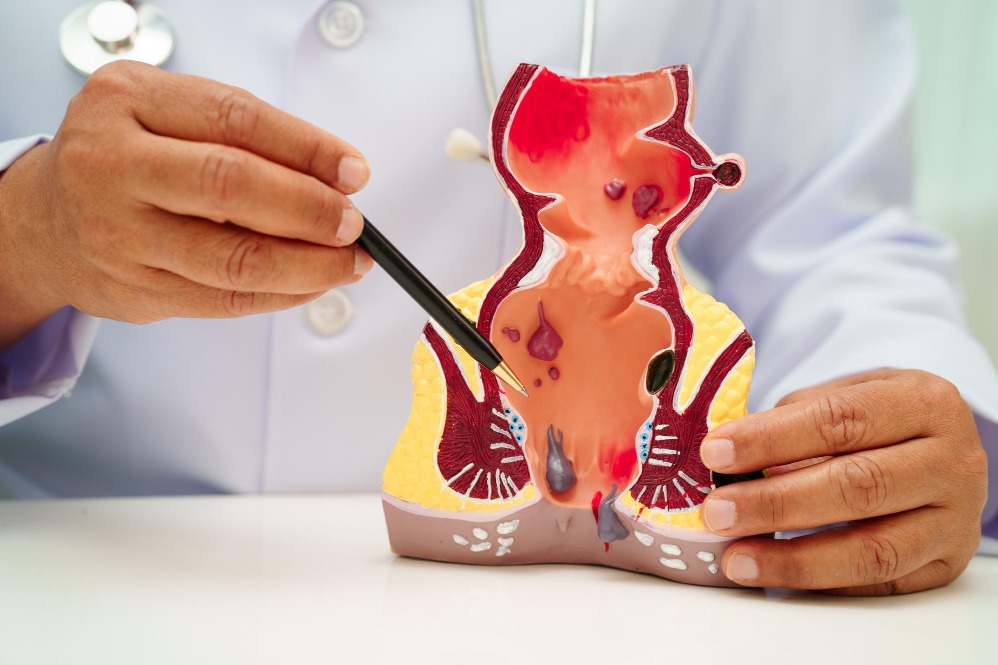
Anal fissure and anal fistula are often mentioned alongside piles, but they are distinct conditions requiring different treatment strategies. Confusing one for another can lead to months of inappropriate self-treatment.
Patients considering Fissure and Fistula Treatment in Thane should first understand which condition they have and why recurrent symptoms may require specialist assessment.
How Does an Anal Fissure Usually Feel?
An anal fissure is a small tear in the lining of the anal canal.
A common symptom is sharp or cutting pain during bowel movements. The pain may continue for some time afterward. Fresh blood may appear on toilet paper or on the surface of stool.
Hard stool and constipation are frequent contributing factors.
Some acute fissures can improve with conservative management aimed at making stools softer and reducing local muscle spasm.
How Is a Fistula Different?
An anal fistula is an abnormal tract between the anal canal and the skin near the anus, often developing after infection or an abscess.
Symptoms may include:
- Recurrent swelling
- Pus or fluid discharge
- Pain near the anus
- Repeated abscess formation
- A small external opening
- Cycles of swelling followed by drainage
Because fistulas can follow different paths in relation to the anal muscles, treatment planning may require careful assessment of the tract.
Why Repeated Self-Treatment Can Be a Problem
People with anorectal symptoms often repeatedly use creams or over-the-counter medicines because they assume every problem is piles.
This may temporarily reduce irritation without addressing the actual condition.
A fissure, fistula, abscess, and haemorrhoids require different management. Persistent or recurrent symptoms are therefore a strong reason to seek examination rather than continuing empirical treatment.
What Should a Specialist Assessment Clarify?
Before proceeding with treatment, patients should know:
- The exact diagnosis
- Whether the condition is acute or chronic
- Whether infection is present
- Whether conservative treatment remains appropriate
- Whether a procedure is required
- What procedure is being proposed
- How continence-related structures are considered during planning
In fistula cases, additional imaging may sometimes be recommended depending on complexity and clinical findings.
When Is a Procedure Considered for a Fissure?
Many early fissures are initially managed without surgery.
Treatment may involve dietary modification, adequate hydration, stool-softening strategies, and prescribed medication.
Chronic fissures that fail to improve despite appropriate management may require further procedural or surgical evaluation.
The treatment chosen should reflect the clinical findings rather than simply the duration of symptoms.
What About Laser Treatment?
Laser techniques may be discussed for selected anorectal conditions, but patients should avoid assuming that a single laser procedure treats piles, fissures, and fistulas in exactly the same way.
Ask the surgeon:
- What is the laser intended to accomplish?
- Why is it appropriate for my condition?
- Are other techniques available?
- What are the important risks?
- What follow-up is required?
Clear answers make it easier to compare treatment recommendations.
Finding Appropriate Care in Thane
Patients in Thane, Maharashtra, seeking treatment for recurring anal pain or discharge should prioritise accurate diagnosis and appropriate procedural planning.
Dr Pallavi Ajankar, Laparoscopy, Laser Piles Surgeon evaluates fissure, fistula, and other anorectal problems and discusses treatment according to the nature and severity of the condition.
Repeated symptoms are an important readiness indicator for reassessment, particularly when pain persists despite treatment or swelling and discharge repeatedly return.
The most important distinction is simple: fissure and fistula are not interchangeable diagnoses. Effective treatment begins by identifying which condition is present and then choosing an approach designed for that specific problem.
Keywords