Rectal bleeding, painful bowel movements, persistent constipation, discharge, or swelling around the anus can be embarrassing to discuss. As a result, some patients repeatedly self-treat symptoms without establishing their actual cause.
A Colorectal Surgery Specialist in Thane can evaluate disorders affecting the colon, rectum, and anal region when symptoms persist, recur, or require surgical assessment.
Similar Symptoms Can Have Different Causes
One of the biggest problems with self-diagnosis is that several colorectal conditions can produce overlapping symptoms.
For example, rectal bleeding may occur with piles, but bleeding can have other causes as well. Pain during bowel movements may suggest an anal fissure, whereas recurrent discharge or an opening near the anus may raise concern about a fistula.
This is why diagnosis should come before treatment.
Symptoms Worth Evaluating
Medical assessment should be considered for symptoms such as:
- Recurrent rectal bleeding
- Pain while passing stool
- Persistent anal itching or irritation
- A swelling or lump around the anus
- Pus or recurrent discharge
- Persistent changes in bowel habits
- Unexplained difficulty passing stool
- Recurrent abscess near the anus
Bleeding should not automatically be assumed to be piles, particularly when it is persistent or associated with other changes.
Piles, Fissure and Fistula Are Different
These three conditions are frequently discussed together but are not the same problem.
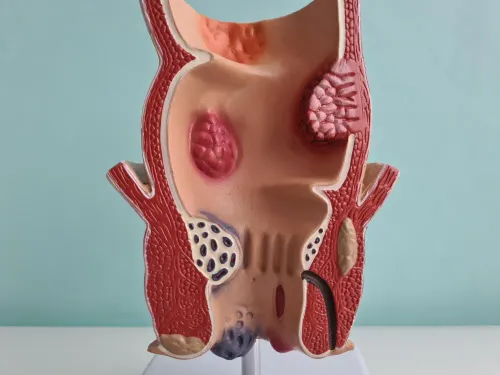
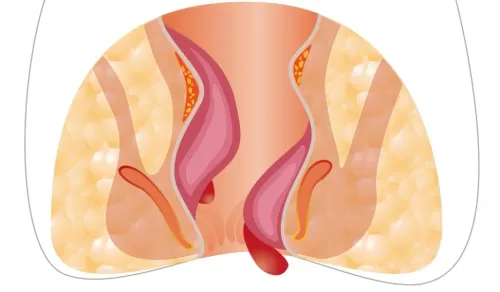
Piles, or haemorrhoids, involve swollen vascular cushions around the anal canal. They may cause bleeding, prolapse, itching, or discomfort.
An anal fissure is a tear in the lining of the anal canal. It commonly causes sharp pain during or after bowel movements and may produce a small amount of fresh bleeding.
An anal fistula is an abnormal tract that often develops after infection or an abscess. It can cause recurrent swelling, pain, or discharge.
Because the underlying problems differ, treatment also differs.
When Is Surgery Considered?
Many colorectal conditions do not immediately require an operation.
Early fissures, for example, may respond to measures that improve stool consistency and reduce anal muscle spasm. Mild haemorrhoidal symptoms can sometimes be managed conservatively.
Procedural or surgical treatment becomes more relevant when symptoms are persistent, severe, recurrent, associated with significant prolapse, or inadequately controlled by appropriate conservative care.
Fistulas often require detailed assessment of the tract before definitive treatment is planned.
Why Examination Matters
Patients sometimes postpone examination because they expect it to be uncomfortable or embarrassing.
However, appropriate examination can provide information that online symptom searches cannot.
Depending on the symptoms, assessment may involve visual inspection, clinical examination, proctoscopy, or additional investigations. More extensive evaluation may be recommended when the history or symptoms suggest another colorectal problem.
Questions to Ask During Consultation
A useful colorectal consultation should clarify:
- What is causing the symptoms?
- How severe is the condition?
- Is conservative treatment appropriate?
- What procedure is recommended if treatment fails?
- What discomfort should be expected afterward?
- How should constipation be prevented?
- When can work and routine activity resume?
- What is the follow-up plan?
For procedures marketed as laser, patients should also ask what exactly the laser is being used to treat and why that technique is appropriate for their particular condition.
Colorectal Care in Thane
Patients in Thane, Maharashtra, have access to different medical and surgical options for anorectal and gastrointestinal conditions. The useful comparison is not simply between conventional and newer techniques, but between treatment plans based on an accurate diagnosis.
Dr Pallavi Ajankar, Laparoscopy, Laser Piles Surgeon evaluates colorectal and anorectal conditions and discusses conservative, procedural, or surgical options according to individual findings.
Persistent bleeding, pain, swelling, or discharge should not be normalised simply because the symptoms have occurred before. Establishing the cause is the first step toward selecting appropriate treatment and avoiding repeated cycles of temporary self-medication.
Keywords