An anal fistula is an abnormal tunnel from the anal canal or rectum to the skin, usually left behind after an anorectal abscess. The right operation depends on the tunnel’s height, branches, abscesses, sphincter involvement, continence history and conditions such as Crohn’s disease; by the end, you will know which questions distinguish a sound treatment plan from a procedure chosen only for its label.
Key takeaways
- Confirm whether drainage comes from a fistula, fissure, piles or skin infection.
- MRI or endoanal ultrasound can map the tract before surgery.
- Fistulotomy suits selected low fistulas; complex cases often need staged treatment.
- Ask how each option affects healing time, recurrence and continence risk.
Is the drainage from a fistula, fissure, piles or another skin problem?
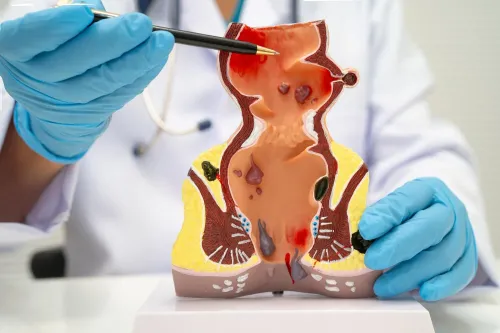
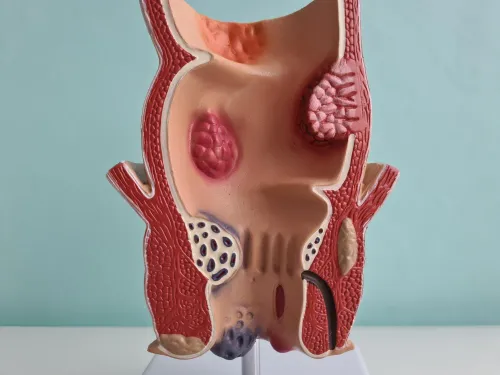
An anal fistula is an abnormal tunnel from the anal canal or rectum to the skin, usually left behind after an anorectal abscess. It causes a repeatedly draining opening, pus or blood, irritation and sometimes pain that improves after drainage but returns.
- An anal fissure is a tear at the anal opening. Expect sharp, cutting pain during or after a bowel movement and bright-red blood, without a persistent skin opening.
- Haemorrhoids cause swollen veins, itching, a lump or bright-red bleeding. They do not usually produce a recurring pus-draining hole.
- A recurrent abscess causes a tender, hot swelling that returns after drainage, with worsening pain, fever or difficulty sitting. A fistula can feed that abscess.
- Hidradenitis causes repeated boil-like nodules and draining tunnels, usually in several skin-fold areas such as the groin, buttocks or armpits.
- An infected skin cyst is usually a round, localised lump with a central pore. It can release foul material, but it does not connect the skin to the anal canal.
Seek prompt assessment for fever, rapidly worsening pain, renewed swelling, pus, blood, difficulty sitting or increasing discharge. An active abscess needs prompt drainage; antibiotics alone do not replace it. A clinician may add antibiotics for spreading skin infection (cellulitis), systemic illness or immunosuppression.
Assessment can include inspection, a digital rectal examination and proctoscopy. MRI pelvis or endoanal ultrasound helps locate internal and external openings, branches, abscesses and sphincter involvement. Anal fistula treatment in Thane should follow this anatomy, not drainage alone.
How do clinicians map the fistula before choosing an operation?
Mapping starts with visual inspection of the skin opening, discharge and swelling. A digital rectal examination checks tenderness, induration and a possible internal opening, while proctoscopy inspects the anal canal and lower rectum. If pain, scarring or uncertainty prevents reliable mapping, examination under anaesthesia allows careful probing and drainage; that finding can change the operation.
Pelvic MRI can trace the internal and external openings, secondary branches, horseshoe tracts, abscesses and the amount of sphincter involved. Endoanal ultrasound also shows the sphincter layers and tract position, but MRI is especially useful for recurrent, branching, horseshoe, supralevator or Crohn’s-related fistulas, where surface examination can miss disease.
Fistula treatment in thane options depend on anatomy, not procedure names.
| Type | Typical anatomy | Planning implication |
|---|---|---|
| Simple low fistula | Short tract involving little sphincter | Fistulotomy may be suitable if continence is good |
| High or complex fistula | More sphincter, branches, horseshoe tract, abscess or supralevator extension | Consider sphincter-preserving or staged treatment |
A clinician also records baseline continence, previous operations, childbirth-related sphincter injury, age and inflammatory bowel disease. These factors increase the consequences of dividing sphincter muscle and can make a continence-preserving plan safer.
Ask which openings and branches were found, whether an abscess remains, and whether MRI or examination under anaesthesia is needed before comparing fistula treatment in thane options.
When is fistulotomy safer than a staged seton plan?
Fistulotomy is usually safer than a staged seton plan when the fistula is simple, low and crosses little sphincter muscle. The surgeon lays the tract open, giving the highest cure probability in a patient with good baseline continence. The divided tissue leaves an open wound that heals gradually.
The calculation changes when the tract crosses substantial sphincter muscle. Dividing more muscle increases the risk of leakage of gas or stool, so protecting continence can outweigh the convenience of one definitive operation.
| Option | What it does | Main trade-off |
|---|---|---|
| Fistulotomy | Opens the entire low tract | Open-wound healing and continence risk if too much muscle is divided |
| Loose draining seton | Keeps the tract open so pus drains and sepsis settles | Usually controls infection first; later surgery may be needed |
| Cutting seton | Gradually divides tissue along the tract | Less commonly chosen and requires particular caution because continence can be harmed |
A loose seton does not automatically mean the fistula is cured. Persistent drainage can be intentional while infection settles or a staged procedure is planned; increasing pain, fever, swelling or rapidly worsening discharge needs prompt review.
Ask a fistula surgeon in Thane how much sphincter the tract crosses, whether branches or an abscess remain, and what continence-preserving plan follows drainage. A cutting seton deserves a specific explanation of alternatives, expected monitoring and the continence risk.
How do sphincter-sparing procedures compare with open surgery?
Fistula treatment in Thane options depend on anatomy, not on whether a procedure is called open, laser or keyhole. Sphincter-sparing techniques are considered when fistulotomy would divide too much anal sphincter, but avoiding deliberate muscle division does not guarantee healing.
| Option | Main approach | Key trade-off |
|---|---|---|
| Fistulotomy | Lays a suitable tract open | Highest cure probability for a simple low fistula, but divides tissue and can threaten continence when the tract crosses more sphincter |
| LIFT | Ties and divides the tract in the intersphincteric plane | Preserves more sphincter; recurrence or further treatment remains possible |
| Advancement flap | Covers the internal opening with rectal or anal canal tissue | Avoids planned sphincter division, but flap healing and recurrence are less predictable |
| Fistula plug | Places material inside the tract to encourage closure | Success varies with tract length, infection, movement and plug displacement |
| Fibrin glue | Seals the tract with an injectable adhesive | Preserves muscle, but leakage, breakdown and recurrence can occur |
| FiLaC or VAAFT | Uses energy or an endoscopic device to ablate the tract | Smaller external wounds do not prove superior or definitive cure |
A high tract, secondary branches, an abscess, an unclear internal opening or previous surgery can change the recommendation. Anal fistula treatment in Thane should therefore begin with mapped anatomy, including sphincter involvement and Crohn’s disease when relevant.
“Laser,” “scarless” and “no-cut” claims describe a technique, not its guaranteed result. Ask about expected healing, recurrence, staged procedures and re-intervention before choosing.
What should a fistula surgery consultation in Thane establish before you choose?
Choose a plan only after the fistula surgery consultation in Thane produces anatomy-specific answers, not just the labels “open” or “laser.” Ask the fistula surgeon in Thane to explain:
- How much anal sphincter does the tract cross, and what continence-preserving option fits that anatomy?
- Is there an abscess, secondary branch, horseshoe extension or hidden internal opening?
- Do you need pelvic MRI or examination under anaesthesia to map it accurately?
- What are your baseline continence symptoms, including urgency, leakage or difficulty controlling gas?
| Question | Concrete answer to request | Why it matters |
|---|---|---|
| Surgical stages | Chance of drainage, a loose seton or later definitive treatment | A staged plan can control sepsis while protecting muscle |
| Recovery | Wound size, dressing method, bathing, pain control and time away from work | Poor wound care can delay healing |
| Follow-up | First review, later checks and the test for healing | Persistent drainage is not always cure or failure |
| Recurrence | Exact next step if the opening returns | Recurrence needs reassessment, not automatic repetition |
Known or suspected Crohn’s disease changes the discussion. Coordinate with gastroenterology because drainage, a loose seton, biologic therapy and other medical treatment may need to work together.
Dr Pallavi Ajankar,Laparoscopy,Laser Piles Surgeon is a local option for discussing anatomy-led fistula care in Thane; laser is not suitable for every tract, especially one with complex branches or significant sphincter involvement.
Related service
Piles,Fissure,Fistula Surgeon in Thane Piles,Fissure,Fistula Surgeon in Thane Dr Pallavi Ajankar is the Best Piles,Fissure,Fistula Surgeon in Kasarvadavali, Naupada, Thane West and Thane. View service → |
Frequently asked questions
How can you tell whether drainage comes from a fistula, fissure, piles or another skin problem?
A fistula usually causes a recurring external opening with pus or blood after a previous abscess. Fissures cause sharp pain during bowel movements, piles cause bleeding or prolapse, and skin infections cause local redness, tenderness and swelling. Examination confirms the source.
How do clinicians map an anal fistula before surgery?
The clinician examines the external opening, anal canal and suspected internal opening. MRI pelvis or endoanal ultrasound can show the tract, side branches and relationship to the anal sphincter, especially in recurrent or complex fistulas.
When is fistulotomy safer than a staged seton plan?
Fistulotomy is usually considered when the tract crosses little sphincter muscle and the surgeon can lay it open without a significant continence risk. A draining or cutting seton plan is considered when the fistula involves more sphincter muscle, has branches, or follows recurrent abscesses.
How do sphincter-sparing procedures compare with open fistulotomy?
Sphincter-sparing procedures preserve more muscle but can involve staged treatment, longer follow-up or a higher chance of needing another procedure. Fistulotomy often provides a direct route to healing for suitable low fistulas but creates an open wound and is unsuitable when too much sphincter would be divided.
What should a fistula surgery consultation in Thane establish before you choose?
Ask for the fistula classification, imaging findings, amount of sphincter involved, proposed procedure, continence risk, wound-care plan, expected recovery and recurrence risk. Confirm whether the surgeon treats complex and recurrent fistulas and whether a staged plan is available.
Keywords