Finding a gallstone on an ultrasound does not, by itself, establish that you need an operation. A proper evaluation matches your pain pattern and examination with blood tests, imaging, complications, medical risks and safer alternatives so you can understand whether surgery is necessary and which approach fits your findings.
Key takeaways
- Biliary pain usually follows meals and sits in the upper-right abdomen.
- Ultrasound detects gallstones; liver tests and MRCP help assess bile-duct stones.
- Fever, jaundice, persistent pain or pancreatitis can require urgent treatment.
- A consultation compares laparoscopic surgery, observation and treatment for bile-duct stones.
How does the surgeon determine whether gallstones are causing your symptoms?
The surgeon first decides whether your symptoms fit biliary pain, rather than treating an ultrasound image.
A gallstone surgeon in Thane will ask about steady, moderate-to-severe pain in the right upper abdomen or epigastrium lasting at least 30 minutes, radiation to the back or right shoulder, nausea, vomiting, meals that trigger episodes, previous attacks, and the exact timing and duration of each event.
The history should also record fever, jaundice, dark urine and pale stools, which can signal inflammation or a bile-duct problem. Tell the surgeon about pregnancy status, current medicines, anticoagulants or antiplatelets, diabetes, heart or lung disease, liver disease and previous abdominal operations; these details affect anesthesia, imaging and surgical planning.
| Symptom pattern | What it suggests | Surgical meaning |
|---|---|---|
| Steady pain for 30 minutes or longer, with nausea or back or shoulder radiation | Compatible with biliary pain | Supports further gallstone evaluation |
| Seconds-long discomfort, isolated bloating or vague indigestion | Less specific for gallbladder disease | Do not assume gallstones caused it |
| No compatible symptoms despite stones on ultrasound | Incidental, asymptomatic gallstones | Cholecystectomy is not automatically justified |
A gallstone surgeon in Thane for surgical evaluation should explain that observation is usual when stones cause no symptoms, except in selected high-risk situations. The scan alone does not prove that surgery will help; the symptom pattern and examination must match.
Which tests show whether surgery is needed or whether a bile-duct stone is present?
Surgery is assessed by combining examination, blood tests and imaging, not by the ultrasound image alone. During a gallstone consultation in Thane, the surgeon checks abdominal tenderness and reviews the scan, symptoms and risks. Abdominal ultrasound is usually the first scan. A normal result does not exclude every cause of biliary pain.
Blood tests commonly include:
- Bilirubin, AST, ALT, ALP and GGT: abnormal cholestatic results, especially raised bilirubin, can indicate impaired bile flow.
- Complete blood count: a raised white-cell count supports inflammation or infection.
- Amylase or lipase: include these when pancreatitis is suspected.
| Ultrasound or test finding | What it may indicate | Usual next step |
|---|---|---|
| Gallstones inside the gallbladder | Stones without proof of duct obstruction | Match with symptoms before recommending surgery |
| Wall thickening, pericholecystic fluid, a distended gallbladder or a positive sonographic Murphy sign | Gallbladder inflammation | Assess urgently for cholecystitis and treatment |
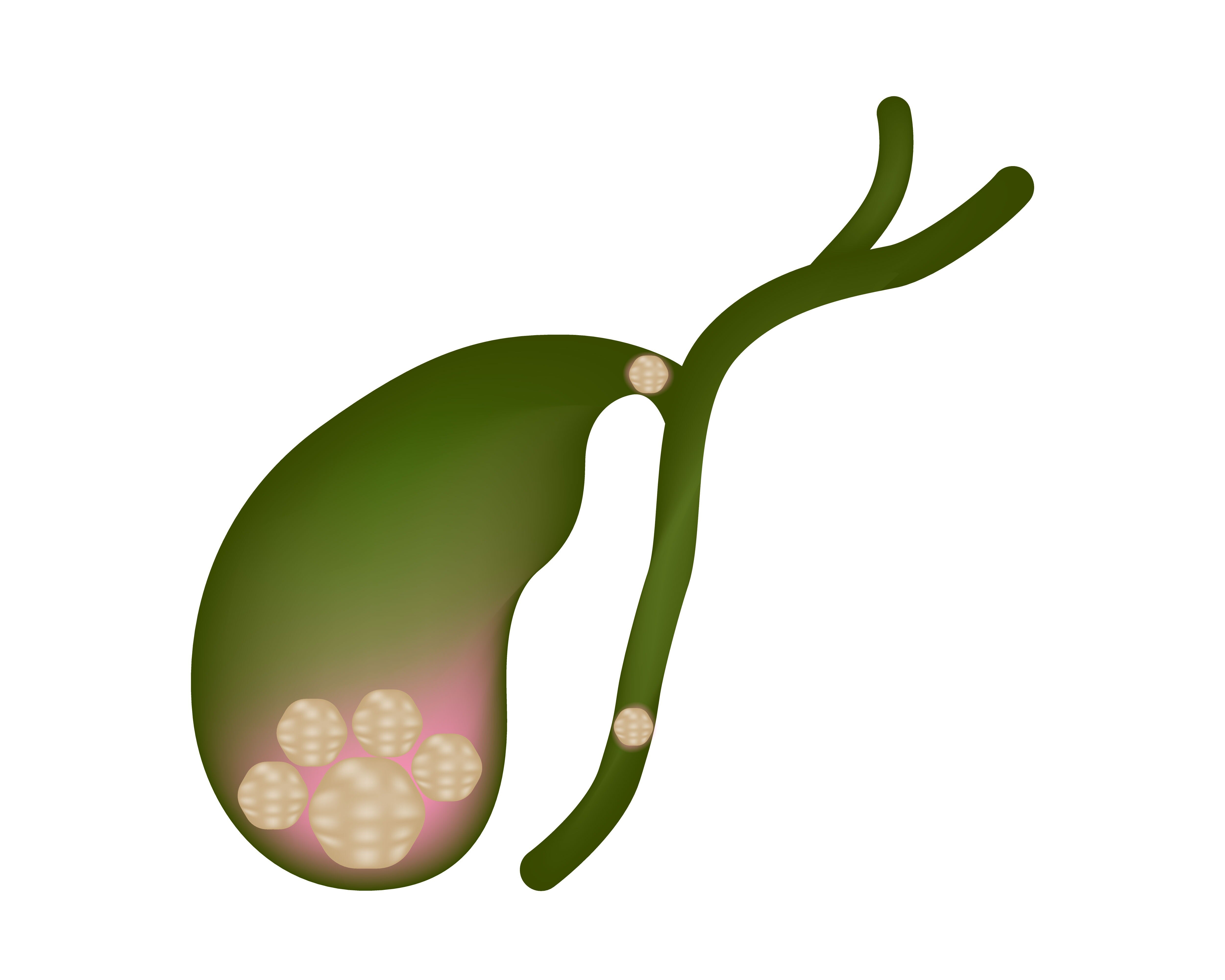
| Jaundice, cholestatic liver tests or a dilated common bile duct | Possible common-bile-duct stone, which differs from a gallbladder stone | Use MRCP or endoscopic ultrasound when the duct finding is uncertain |
| A stone visualised in the common bile duct | Confirmed duct obstruction risk | ERCP is primarily used to clear the duct, not as a routine diagnostic test |
A gallbladder stone specialist in Thane should also consider MRCP or endoscopic ultrasound before proceeding directly to routine laparoscopic surgery when duct disease is suspected. A normal ultrasound does not rule out all biliary causes.
Which findings make gallstone surgery necessary or urgent?
Recurrent biliary colic shifts the decision from observation toward planned gallbladder removal, especially when attacks interfere with eating, sleep or daily activity. Surgery becomes more pressing when inflammation, infection, pancreatitis or a bile-duct stone appears.
| Finding | What it suggests | Usual next step |
|---|---|---|
| Recurrent biliary colic | Symptomatic gallstones | Discuss laparoscopic cholecystectomy |
| Persistent pain, fever or inflammatory results | Acute cholecystitis | Early surgery, often within one week if fit |
| Gallstone pancreatitis | Pancreatic inflammation from a passing or retained stone | Treat the acute episode, assess obstruction, then plan surgery |
| Common-bile-duct stone | Choledocholithiasis | Clear the duct, then assess for cholecystectomy |
| Pus or a hole in the gallbladder | Empyema or perforation | Urgent hospital treatment and source control |
| Selected polyps or high-risk features | Possible malignancy risk | Specialist review and possible removal |
A short, self-limited attack differs from acute cholecystitis. Persistent right-upper-quadrant pain with fever, raised white-cell count or other inflammatory results supports early laparoscopic cholecystectomy rather than waiting several weeks.
Gallstone pancreatitis requires lipase or amylase, liver tests and assessment for a retained duct stone. ERCP is not automatic; urgent ERCP is reserved for ongoing obstruction or cholangitis. After duct clearance, suitable patients are assessed for gallstone surgery in Thane.
Seek hospital care for:
- Persistent or worsening pain
- Fever, yellow eyes or skin, dark urine or pale stools
- Repeated vomiting, confusion or low blood pressure
These signs require hospital assessment, not a routine gallstone consultation in Thane.
How do the surgical and nonoperative options compare?
For symptomatic gallstones, planned laparoscopic cholecystectomy usually offers the definitive treatment: it removes the gallbladder, not just the stones. Fat reduction or medicines may ease attacks, but they do not reliably prevent recurrence. Laser treatment does not remove gallstones, and removing stones alone is not equivalent to removing the gallbladder.
| Option | What it means | When it applies |
|---|---|---|
| Planned laparoscopic cholecystectomy | Keyhole removal of the gallbladder | Recurrent symptoms or uncomplicated disease |
| Emergency surgery | Prompt operation during severe or persistent illness | Acute cholecystitis, empyema or perforation |
| Open cholecystectomy | Removal through a larger abdominal incision | Unsafe laparoscopic access or difficult anatomy |
| Nonoperative observation | Monitoring without immediate surgery | Incidental, symptom-free stones or unfit patients |
A gallstone surgery in Thane consultation should also address stones in the common bile duct. ERCP, laparoscopic duct exploration or another specialist approach may be needed before or around gallbladder surgery; removing the gallbladder does not clear the duct.
During surgery, the surgeon should obtain the critical view of safety before dividing the cystic duct and artery. Severe inflammation or unclear anatomy can require intraoperative cholangiography, subtotal cholecystectomy, conversion to an open operation or stopping for a safer plan.
A gallbladder stone specialist in Thane should explain bile-duct injury, bile leak, retained stones, wound infection and chest complications. Conversion is a safety decision, not proof of poor performance.
What should you expect from a complete surgical consultation in Thane?
A complete consultation should end with a documented reason for or against surgery, not simply an ultrasound report showing stones.
1. The surgeon should record pain location, duration, food relation, previous attacks, vomiting, fever, jaundice, dark urine and pale stools, then perform an abdominal examination. Ask whether the symptoms fit gallstone disease or suggest reflux, ulcer, pancreatitis, liver disease or another diagnosis.
2. The review should include ultrasound findings, bilirubin, AST, ALT, ALP, GGT and a complete blood count. Confirm whether the common bile duct was seen and assessed for dilation or stones; MRCP or endoscopic ultrasound may be needed when the result is uncertain.
3. Ask what benefit surgery offers, what observation risks, and why removing the gallbladder is standard for recurrent symptomatic stones. Removing the gallbladder does not clear a duct stone, so ERCP, laparoscopic duct exploration or another clearance plan may be needed before or around surgery.
4. The plan should cover pregnancy, prior upper-abdominal surgery, obesity, anticoagulants or antiplatelets, cardiopulmonary disease, diabetes and cirrhosis. It should also state whether a higher-acuity hospital is safer and what happens if inflammation obscures anatomy, including cholangiography, subtotal surgery, conversion to open surgery or stopping.
A consultation with Dr Pallavi Ajankar,Laparoscopy,Laser Piles Surgeon can help relate these findings to a specific operative plan in Thane. The label gallstone surgeon in thane does not prove that surgery is required; symptoms, test results, risks and your preferences should decide.
Related service
Gallbladder/Gallstone Surgeon in Pune Gallbladder/Gallstone Surgeon in Pune Dr Pallavi Ajankar is the Best Gallbladder Surgeon/Gallstone Surgeon in Kasarvadavali, Naupada, Thane West and Thane. View service → |
Frequently asked questions
How does a surgeon determine whether gallstones are causing symptoms?
The surgeon matches your pain pattern, duration, triggers and associated symptoms with the ultrasound findings. Gallstones alone do not prove that they caused the pain.
Which tests show whether surgery is needed or a bile-duct stone is present?
An abdominal ultrasound usually identifies gallstones and gallbladder inflammation. Blood tests including bilirubin, alkaline phosphatase, AST and ALT assess bile-flow problems; MRCP or endoscopic ultrasound can investigate a suspected bile-duct stone.
Which findings make gallstone surgery necessary or urgent?
Repeated typical biliary pain, acute cholecystitis, gallstone pancreatitis or complications support surgery. Fever, jaundice, severe persistent pain, low blood pressure or confusion require urgent medical assessment.
How do surgical and nonoperative options compare for gallstones?
Laparoscopic cholecystectomy removes the gallbladder and reduces recurrent gallstone attacks. Observation avoids an operation when stones cause no symptoms, while medicines and dietary changes do not remove the usual risk of future attacks.
What should you expect from a gallstone consultation in Thane?
Bring your ultrasound report, blood-test results, medication list and a symptom timeline. The surgeon reviews your diagnosis, checks for bile-duct involvement, explains preparation and recovery, and discusses whether laparoscopic surgery is appropriate.
Keywords