Rectal bleeding, pain, itching or a lump needs more than a quick assumption that you have piles. By the end, you will know how to prepare for an appointment, what examinations and treatment decisions to expect, and which warning signs need urgent care.
Key takeaways
- Book an appointment for recurrent bleeding, lumps, itching, mucus, or tissue prolapse.
- Bring your symptom timeline, medicines, medical records, and previous test reports.
- Ask which diagnosis, grade, and treatment alternatives support the recommended procedure.
- Seek prompt review for heavy bleeding, fever, worsening pain, or difficulty passing urine.
When to book an appointment and how to prepare
Book a routine appointment for recurrent bright-red bleeding, itching, discomfort, a lump, mucus, or tissue that comes out during bowel movements and goes back in. Persistent bleeding still needs assessment because fissures, fistulas, inflammatory bowel disease, polyps and colorectal cancer can mimic piles.
| Situation | What to do | Why it matters |
|---|---|---|
| Recurrent bleeding, itching, swelling or prolapse without severe illness | Arrange a routine appointment | The cause and haemorrhoid type need confirmation |
| Sudden severe pain with a hard, tender lump | Seek same-day assessment | A thrombosed external haemorrhoid may need different treatment |
| Heavy or continuing bleeding, dizziness, faintness, fever, pus, severe swelling, or rapidly worsening pain | Go to urgent care or an emergency department | These symptoms can indicate significant blood loss or infection |
| Inability to pass stool or urine | Seek urgent assessment | Obstruction or postoperative urinary retention requires prompt treatment |
For a piles surgery consultation in Thane, bring a list of every medicine, including warfarin, apixaban, aspirin and clopidogrel, plus allergies, diabetes history, constipation details and previous anorectal operations. Carry relevant reports and note when bleeding began, its colour and amount, bowel-habit changes, pain, prolapse and treatments already tried.
Write down questions about the haemorrhoid grade and location, whether bleeding needs another investigation, the named procedure, anaesthesia, expected time off work, complications and the plan if symptoms recur. Do not stop anticoagulants without medical advice.
What happens during the consultation and examination
A piles specialist in Thane confirms haemorrhoids through your symptom history and a focused anorectal examination, not from bleeding alone. Expect questions about pain, itching, prolapse, bleeding colour and amount, constipation, diarrhoea, altered bowel habits, weight loss, family history, previous anorectal operations, diabetes, anticoagulants and antiplatelet medicines.
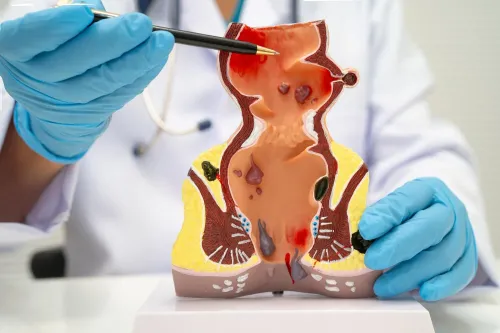
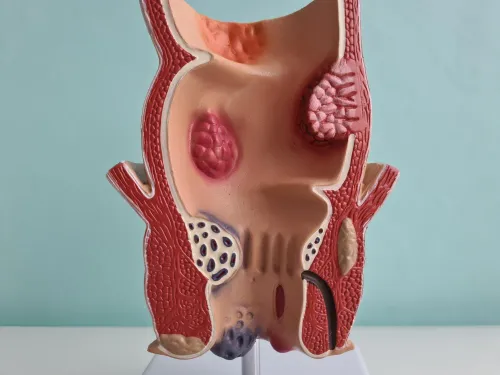
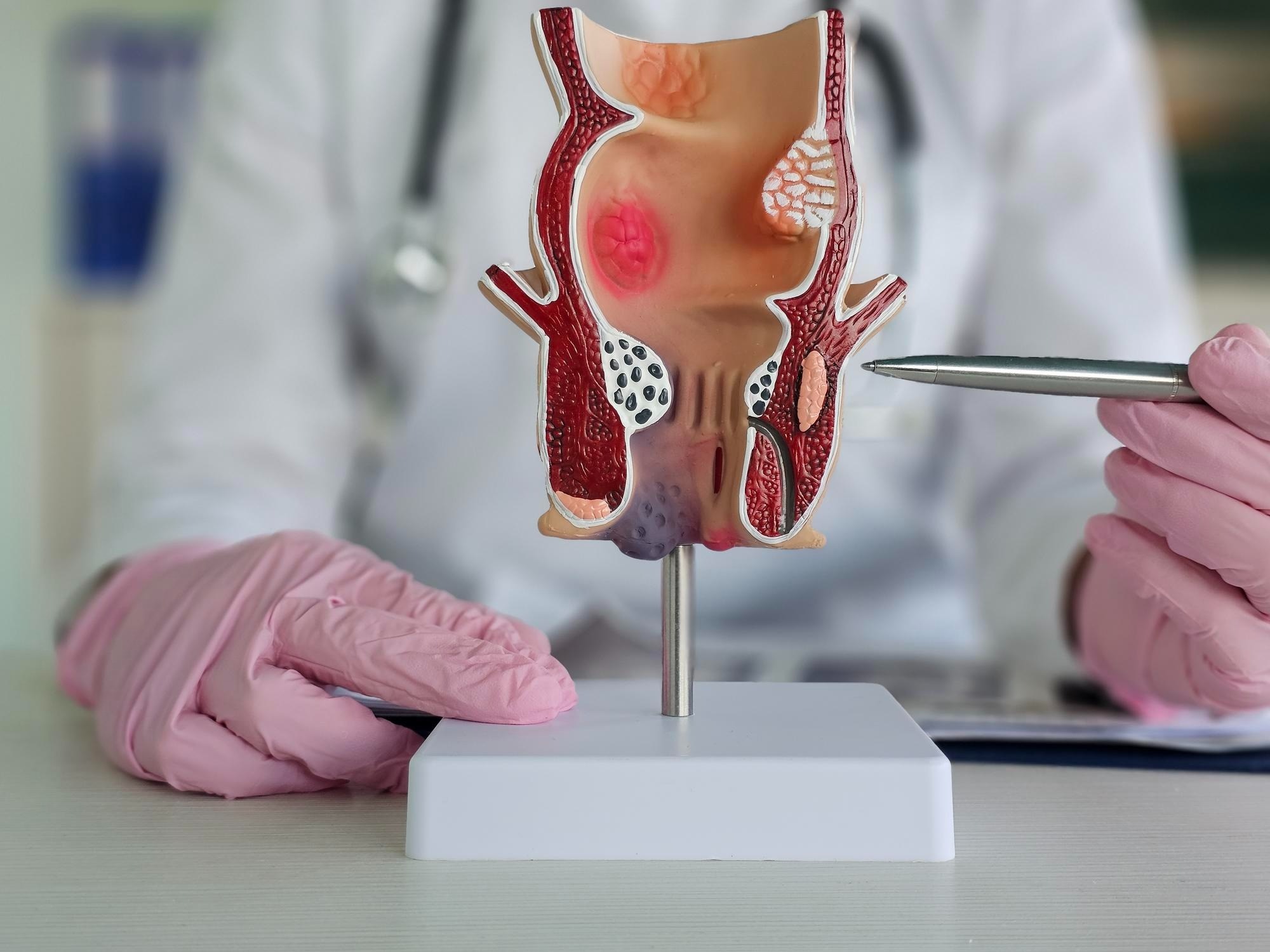
The specialist will assess whether internal haemorrhoids are grade I to IV and whether an external component is present.
- Anal fissure: a visible tear usually causes sharp, cutting pain during and after a bowel movement.
- Fistula: a small opening, recurrent discharge or a history of a painful swelling that burst suggests an abnormal tract.
- Abscess: severe constant pain, tenderness, swelling, fever or pus needs prompt assessment rather than routine piles treatment.
- Skin tag: a soft external flap causes irritation or cleaning difficulty but does not explain fresh bleeding by itself.
- Rectal prolapse: a larger circular protrusion of rectal tissue differs from a haemorrhoid bundle and may need reduction.
- Bowel-related bleeding: persistent bleeding, dark or mixed-in stool, anaemia, weight loss or a changed bowel pattern can indicate polyps, inflammatory bowel disease or colorectal cancer.
The clinician usually inspects the anus, performs a digital rectal examination and uses anoscopy or proctoscopy when appropriate. Severe fissure pain can limit an internal examination. If the bleeding pattern, age, screening history or bowel symptoms point higher up, the specialist may recommend colonoscopy instead of labelling it piles.
How the specialist chooses treatment before surgery
The first decision is whether symptoms settle with bowel regulation and medicines, not whether a laser procedure is available. Grade, location, prolapse, thrombosis, recurrence and response to earlier care determine the next step.
1. Grade I internal haemorrhoids stay inside the anal canal, so observation, increased fibre, adequate fluids, avoiding straining and short-term symptom medicines are usually reasonable. Grade II prolapse during straining but returns by itself; persistent bleeding or prolapse often makes rubber-band ligation suitable.
2. Grade III prolapses and needs a finger to push it back. A specialist may offer banding for selected internal disease, but repeated prolapse, large cushions or failed banding can justify an operation. Grade IV remains outside and cannot be reduced; advanced prolapse usually needs surgical treatment rather than medicines alone.
3. Location changes the choice. Banding treats internal haemorrhoids above the sensitive dentate line, not a large external component. Combined internal and external disease, prominent external skin, or circumferential prolapse may require excisional haemorrhoidectomy or another operation.
4. A suddenly painful, firm, bluish lump suggests thrombosis, usually an external haemorrhoid. Treatment depends on pain, clot size and how soon it began: observation with analgesia and bowel-softening measures may be enough, while severe early pain can prompt clot removal or excision.
5. Recurrence after adequate fibre, stool-softening treatment or previous banding shifts the discussion toward another office treatment or surgery. Ask which exact tissue will be treated and what the plan is if bleeding or prolapse returns. A failed non-surgical trial does not automatically mean every haemorrhoid needs removal.
What the laser piles treatment process involves
The laser piles treatment process is not one standard operation. Your surgeon should name the technique: laser haemorrhoidoplasty shrinks internal haemorrhoidal tissue from within, while laser-assisted excision removes tissue. After consent and medication review, you receive local, spinal or general anaesthesia according to the procedure and your health.
You lie on your side or in a lithotomy position, with padding and privacy maintained.
During the operation, the surgeon examines the anal canal, places the laser fibre in the planned haemorrhoidal tissue, and delivers controlled energy. Large external components, thrombosis or advanced prolapse may require excision instead; a laser label does not make that option suitable for every lump.
Before consenting, ask the laser piles doctor in Thane:
- What are the haemorrhoid grade and location, and have you ruled out another cause of bleeding?
- What is the exact procedure, will you remove tissue, and why is it better for my anatomy than banding, artery ligation or excisional haemorrhoidectomy?
- Which anaesthetic will you receive, what pain should you expect, and when can you return to work?
- What are the risks of bleeding, urinary retention, infection, narrowing or incontinence?
- Is this same-day treatment, what pain medicines and bowel-softening plan will you receive, and when is review?
- What will you do if symptoms persist or recur?
A consultation with Dr Pallavi Ajankar,Laparoscopy,Laser Piles Surgeon should include discussion of anticoagulants, diabetes, constipation and previous anorectal surgery. Arrange an escort if sedation or general anaesthesia is used.
Related services
Piles Doctor in Thane Dr Pallavi Ajankar is the Best , Piles Specialist, Piles Doctor in Kasarvadavali, Naupada, Thane West and Thane. View service → |
Laser Piles Doctor in Thane Dr Pallavi Ajankar is the Best Laser Piles Surgeon in Kasarvadavali, Naupada, Thane West and Thane. View service → |
Recovery, follow-up and signs that need prompt review
Mild pain, swelling, a small amount of bright-red blood and altered bowel movements can occur after piles treatment. You may also feel urgency, incomplete emptying or discomfort when sitting. These symptoms should gradually settle according to the procedure and your discharge instructions.
| Symptom | Usually expected | Seek prompt medical attention |
|---|---|---|
| Pain or swelling | Mild and manageable with prescribed medicine; swelling should not rapidly increase | Pain that worsens instead of easing, severe swelling, pus or rapidly worsening tenderness |
| Bleeding | A few spots or light bleeding after a bowel movement | Heavy, persistent or increasing bleeding, especially with dizziness or weakness |
| Temperature | No fever, or a brief mild rise only if your clinician has explained it | Fever, chills or feeling increasingly unwell |
| Urination | Passing urine within the expected recovery period | Sudden inability to pass urine |
Keep the area clean by rinsing with lukewarm water after bowel movements, then patting it dry. Avoid vigorous rubbing, scented products and unapproved creams. Use dressings exactly as instructed.
Drink enough fluid, eat fibre-rich food and take a prescribed stool softener or laxative when advised. Do not strain, delay the urge to open your bowels or sit on the toilet for long periods. Keep the scheduled follow-up so healing, bowel regulation and persistent symptoms can be checked.
Contact the treating service promptly for repeated vomiting or any symptom that is rapidly worsening.
Frequently asked questions
When should I book a piles specialist appointment in Thane?
Book a routine appointment for recurrent bright-red bleeding, itching, discomfort, a lump, mucus, or tissue that comes out during bowel movements and goes back in. Persistent bleeding needs assessment because fissures, fistulas, inflammatory bowel disease, polyps, and colorectal cancer can mimic piles.
How should I prepare for a piles surgery consultation in Thane?
Write down when symptoms began, how often bleeding occurs, whether tissue prolapses, and what treatments you have tried. Bring your medication list, relevant medical records, previous test reports, and details of conditions such as diabetes or bleeding disorders.
What happens during a consultation with a piles specialist in Thane?
The specialist reviews your symptoms, bowel habits, medical history, and previous treatment before examining the anal and rectal area. The examination may include a visual inspection, a digital rectal examination, and an anoscopy when needed.
How does a specialist choose treatment before surgery?
The choice depends on the diagnosis, haemorrhoid grade, bleeding and prolapse pattern, pain, previous treatment, and your general health. Ask about dietary and bowel-habit measures, medicines, office procedures, and surgery, including the expected benefits and trade-offs.
What does the laser piles treatment process involve?
The specialist explains the diagnosis, planned laser technique, anaesthesia, preparation, expected discomfort, and discharge plan before treatment. Ask what happens during each stage, how long activity restrictions last, and which symptoms require urgent contact.
Keywords