Bleeding, pain, itching or a lump that returns after treatment is not proof that the same haemorrhoid has come back. A careful evaluation identifies the cause, checks for warning signs, reviews earlier treatment and matches the next step to the haemorrhoid’s location, prolapse grade and your bowel habits.
Key takeaways
- Bright-red bleeding does not confirm piles; pain, pus, fever, or altered stools need assessment.
- Bring previous prescriptions, procedure records, symptom dates, and details of bleeding or prolapse.
- Tell the doctor whether earlier treatment involved medicines, rubber-band ligation, or surgery.
- Seek prompt review for heavy bleeding, fever, pus, severe pain, or a prolapsed lump that will not go back.
First, is the returning symptom actually piles?
Bright-red blood on toilet paper or in the bowl fits haemorrhoids more closely than blood mixed through stool, but bleeding alone does not confirm piles. The doctor also asks about pain during stool or pain that continues afterward, itching, mucus, a lump, tissue coming out, pus, fever and altered bowel habits.
This is how a recurrent piles doctor in Thane separates piles symptoms returning from other disease.
| Condition | Clues that point away from simple recurrent piles |
|---|---|
| Anal fissure | Sharp pain during and after stool, often with a small streak of bright-red blood |
| Fistula | Recurrent drainage or pus from a small opening near the anus |
| Abscess | Constant, rapidly worsening pain, swelling and fever |
| Rectal prolapse | A larger ring or segment of tissue comes out, sometimes becoming trapped |
| Inflammatory bowel disease | Diarrhoea, urgency, mucus, abdominal pain or repeated bleeding |
| Anal warts | Rough, clustered skin-coloured or reddish growths |
| Colorectal cancer | Blood mixed through stool, altered bowel habits, anaemia, weight loss or persistent abdominal pain |
Seek urgent assessment for heavy or continuous bleeding, black stools, dizziness or fainting, fever, rapidly worsening pain, pus, urinary difficulty, or a painful irreducible prolapse. A hard persistent lump also needs prompt review.
Persistent bleeding, iron-deficiency anaemia, abdominal pain, a changed bowel pattern or a family history of colorectal cancer can justify colon evaluation even when haemorrhoids are visible.
What the consultation and examination look for
A lady piles doctor in Thane for recurring piles starts by testing the recurrence, not accepting the label. Expect questions about bleeding colour and amount, pain during or after bowel movements, itching, lump formation, prolapse, and whether tissue returns alone or needs manual replacement.
The history also covers constipation, hard stools, straining, diarrhoea, urgency, fibre and fluid intake, laxative use, toilet sitting time and toilet posture.
The doctor will ask about pregnancy, recent childbirth, breastfeeding, future pregnancy plans, pelvic-floor symptoms, medicines and earlier procedures. These details can change the examination and treatment.
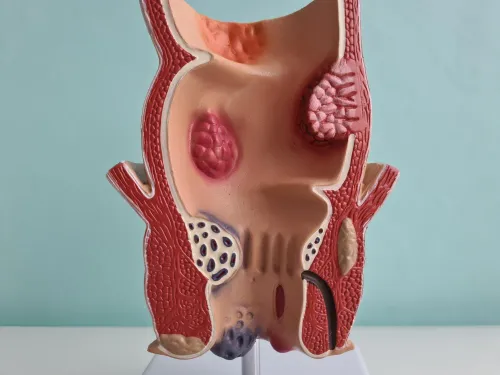
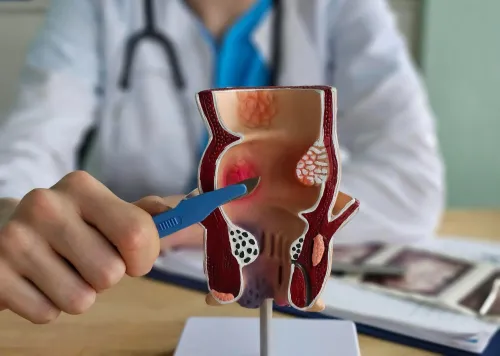
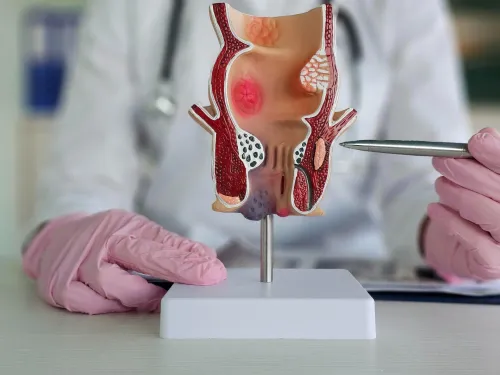
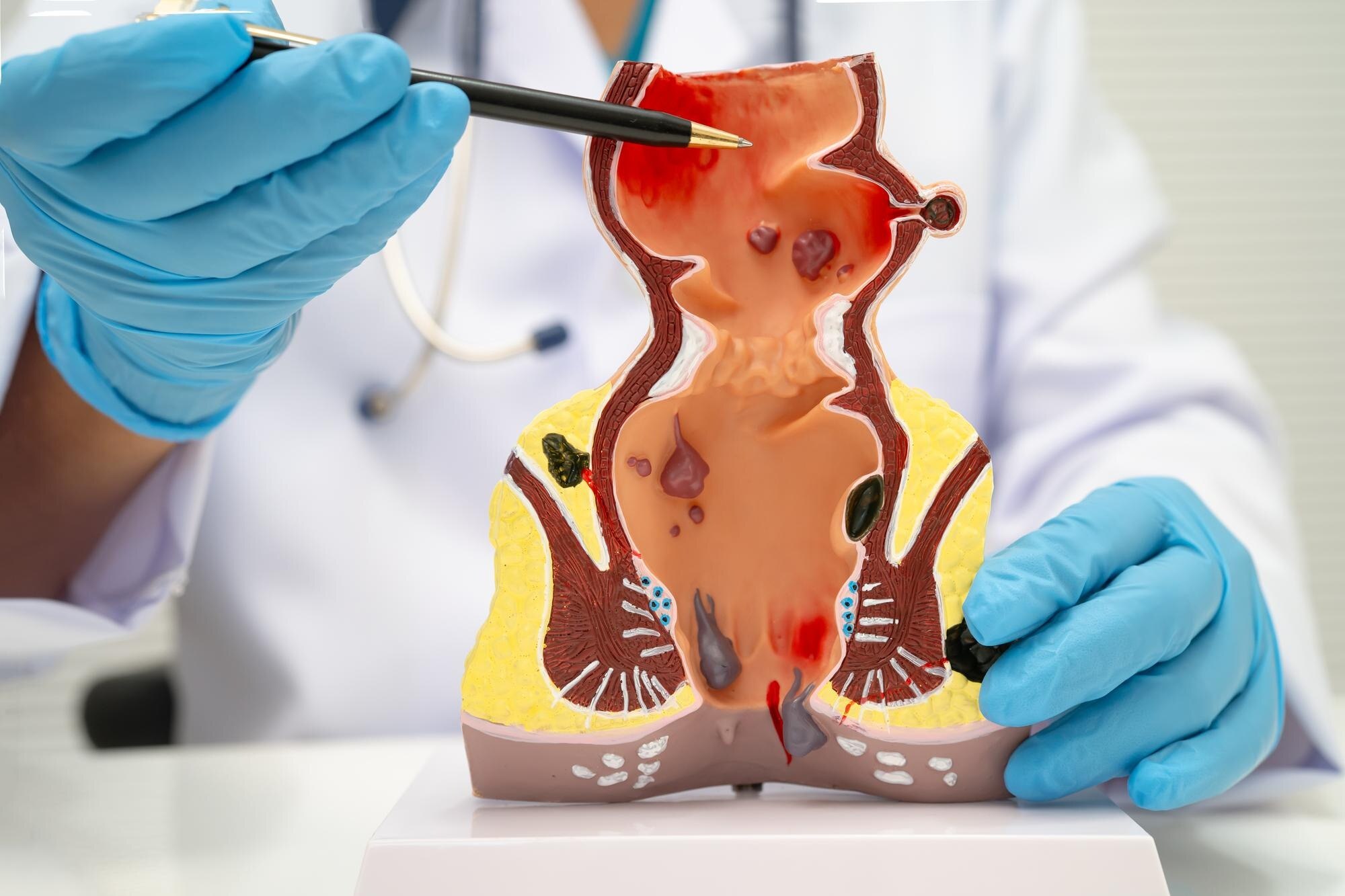
The physical assessment usually includes perianal skin inspection, a digital rectal examination when appropriate, and anoscopy or proctoscopy to locate internal haemorrhoids and assess prolapse.
| Grade or finding | What the examiner sees |
|---|---|
| Grade I | Internal haemorrhoid without prolapse |
| Grade II | Prolapses during straining, then reduces by itself |
| Grade III | Prolapses and needs manual replacement |
| Grade IV | Remains permanently prolapsed |
| External disease | Lies outside; a sudden tender bluish lump suggests thrombosis, not prolapse |
During a piles consultation for women in Thane, discuss privacy, consent, a female examiner and a chaperone before the examination. Ask whether a vaginal or pelvic examination is genuinely necessary; the anal assessment should remain clinically appropriate.
How earlier treatment changes the recurrence assessment
Earlier treatment changes recurrence assessment because it shows which anatomy was treated and what remained. A recurrent piles doctor in Thane should not select another procedure from the phrase piles symptoms returning alone.
Before recommending treatment, review earlier prescriptions, consultation notes, procedure notes, colonoscopy reports and pathology reports. Establish whether the disease was internal, external or combined; its prolapse grade; the number and location of treated haemorrhoids; the procedure used; complications; and the response afterward. Note whether constipation or straining continued.
| Possible explanation | What the records and examination may show | Why it matters |
|---|---|---|
| Residual tissue or incomplete treatment | Some haemorrhoidal tissue was untreated or remained after the procedure | The same procedure may not address the actual source |
| New haemorrhoid | A different haemorrhoid has enlarged since the earlier treatment | Its location and type may require a different approach |
| Recurrent prolapse | Treated tissue or another haemorrhoid is again coming out | Grade and reducibility guide treatment |
| Scar-related narrowing | Healing has narrowed the anal canal | Repeating treatment can worsen obstruction or pain |
| Another condition | Fissure, fistula, abscess, rectal prolapse or another bleeding source is present | Haemorrhoid treatment would miss the diagnosis |
Do not choose treatment from a photograph. A lump felt during one bowel movement does not prove recurrence; swelling, prolapse and thrombosis can look different across episodes. Repeating the same treatment without reassessing anatomy can prolong bleeding or pain while the real condition remains untreated.
Why symptoms return and what treatment options are compared
A lady piles doctor in Thane for recurring piles first asks what is driving the return: persistent straining, hard stools, prolonged toilet sitting, low fibre, inadequate fluids, frequent diarrhoea, pregnancy, obesity, incomplete treatment or a new haemorrhoid. The choice then depends on examination findings, prolapse grade, symptom severity and earlier records.
| Option | Main use | Trade-off |
|---|---|---|
| Observation | Mild symptoms without significant prolapse | Avoids procedures, but symptoms can persist |
| Bowel-habit correction | Straining, hard stools or toilet-related triggers | Needs consistent effort; fibre must rise gradually because sudden loading causes bloating |
| Medicines | Pain, itching, swelling or difficult stools | Relieves symptoms but may not correct prolapse |
| Rubber-band ligation | Symptomatic internal haemorrhoids | Office treatment with less recovery than surgery; bleeding or recurrence can still occur |
| Injection treatment | Selected internal haemorrhoids | Less invasive, but results depend on haemorrhoid size and prolapse |
| Excisional haemorrhoidectomy | Substantial external disease, combined internal-external disease or advanced prolapse | More definitive for suitable anatomy, with more postoperative pain and recovery |
| Laser treatment | Selected cases after assessment | Recovery and recurrence benefits vary; laser is not automatically suitable for every recurrence |
Gradually increase dietary fibre, drink adequate fluids and avoid straining before escalating treatment. A recurrent piles doctor in Thane also checks for residual tissue, recurrent prolapse, scar narrowing or another diagnosis rather than repeating a procedure from a photograph.
Dr Pallavi Ajankar,Laparoscopy,Laser Piles Surgeon can use examination findings and prior records to match treatment to anatomy, not merely to the word “recurrence.”
Related services
Piles Doctor in Thane Dr Pallavi Ajankar is the Best , Piles Specialist, Piles Doctor in Kasarvadavali, Naupada, Thane West and Thane. View service → |
Laparoscopic Surgeon in Thane Dr Pallavi Ajankar is the Best Laparoscopic Surgeon in Kasarvadavali, Naupada, Thane West and Thane. View service → |
What to take to the appointment and when follow-up cannot wait
Bring records and a symptom log to the appointment; they help the doctor distinguish a new haemorrhoid from an untreated cause of piles symptoms returning.
- Pack previous prescriptions, procedure notes, discharge notes, colonoscopy or proctoscopy reports, and pathology results.
- Write down every current medicine, including laxatives, painkillers, blood thinners and supplements.
- Record when bleeding occurred, its amount and colour, stool consistency, pain timing, itching, and whether tissue prolapsed or needed manual replacement.
- Tell the doctor about pregnancy, recent delivery, breastfeeding and plans for another pregnancy. These facts affect the choice of medicines, injections and operations during a piles consultation for women in Thane.
- Note constipation, straining, diarrhoea, urgency, fibre and fluid intake, laxative use, and prolonged toilet sitting. Follow-up must address the bowel habit driving recurrence, not only the visible lump.
Do not wait for a routine visit if bleeding is heavy or continuous, stools are black, or you feel dizzy or faint. Seek urgent assessment when fever accompanies anal pain, pus or spreading redness appears, a lump is hard and persistent, or unexplained weight loss occurs.
Rapidly worsening pain, urinary difficulty or a painful prolapse that will not go back inside also needs prompt care.
Follow-up confirms healing, reassesses symptoms that persist, checks for another diagnosis and corrects the trigger. One episode in which no lump appears does not prove the problem has been cured.
Frequently asked questions
How does a doctor check whether returning symptoms are actually piles?
The doctor reviews bleeding, pain, itching, mucus, lumps, prolapse, pus, fever, and bowel changes, then performs an appropriate anorectal examination.
What should I take to a recurring piles consultation?
Take previous prescriptions, investigation reports, procedure details, dates of treatment, and a clear record of your current symptoms and bowel habits.
Why can piles symptoms return after treatment?
Symptoms can return when constipation, straining, prolonged toilet sitting, diarrhoea, pregnancy-related pressure, or untreated haemorrhoidal tissue persists.
When should recurring piles symptoms receive prompt medical attention?
Arrange prompt medical review for heavy or repeated bleeding, severe or persistent pain, fever, pus, black stools, changed bowel habits, or tissue that remains outside.
Keywords