
Stable symptoms usually call for a planned assessment, while unrelenting pain, fever, jaundice, repeated vomiting, confusion or fainting require urgent hospital evaluation. By the end, you will know which information determines treatment, when observation is reasonable, and when consultation should lead to elective or emergency care.
Key takeaways
- Seek emergency assessment for fever, jaundice, persistent vomiting or severe abdominal pain.
- Book consultation for recurring right-upper-abdominal pain without emergency warning signs.
- Expect examination, ultrasound review and blood-test recommendations before surgery decisions.
- Planned laparoscopic surgery avoids repeated attacks but still carries operative risks.
Should you book a consultation or seek emergency assessment first?
A stable pattern of intermittent right-upper-abdominal pain without fever, jaundice, repeated vomiting or marked tenderness usually fits an outpatient gallbladder surgeon in Thane consultation. The choice—gallbladder surgeon in Thane consultation or surgery—depends on symptoms, examination, ultrasound and blood tests, not on gallstones alone. Surgery is not automatically performed at the first appointment.
Seek immediate hospital assessment instead of waiting for a routine appointment if you have:
- Severe or persistent right-upper-abdominal pain
- Fever or chills
- Jaundice, including yellow eyes or dark urine
- Repeated vomiting or uncontrolled pain
- Marked tenderness or a rigid abdomen
- Confusion, extreme weakness or fainting
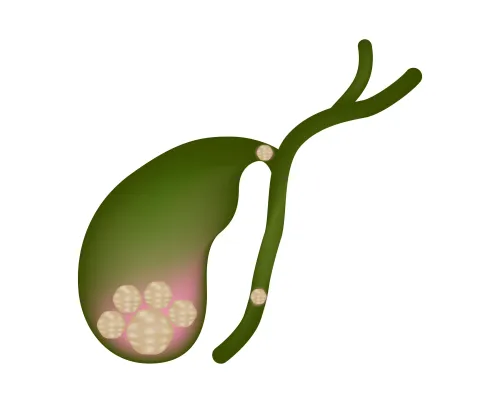
These signs can indicate acute cholecystitis, common bile duct obstruction, cholangitis or pancreatitis. Fever with jaundice is especially concerning for infection in an obstructed bile duct, while severe pain with vomiting can reflect pancreatic inflammation.
The decision flow is simple: stable symptoms mean consultation first; systemic illness, obstruction signs or uncontrolled pain mean emergency evaluation. Hospital clinicians may consider surgery, antibiotics, drainage or ERCP according to examination, blood results and imaging.
A surgeon consultation cannot replace emergency care, and arranging a gallbladder operation in Thane should never delay assessment when these warning signs are present.
What happens during a gallbladder surgery consultation?
The first appointment establishes whether your pain is caused by gallstones and whether surgery is appropriate; it is not an automatic operation.
A gallstone surgery consultation in Thane is especially important before immediate treatment if you are pregnant, take anticoagulants, have major heart or lung disease, underwent upper-abdominal surgery, or may have a common bile duct stone.
- The surgeon records pain location, timing, duration, food triggers, fever or jaundice, previous scans, medicines, allergies, anticoagulant use and prior operations, then examines your abdomen.
- The usual initial investigation is an abdominal ultrasound, supported by a complete blood count, liver function tests and bilirubin. Add amylase or lipase when pancreatitis is possible, and arrange pregnancy testing when relevant before imaging, anaesthesia or surgery.
- If ultrasound is inconclusive or a common bile duct stone is suspected, MRCP, CT or endoscopic ultrasound may follow. ERCP is usually reserved for treating a confirmed or strongly suspected duct stone, not routine diagnosis.
Ask whether the gallbladder should be removed, whether ERCP could be needed, and how anaesthesia, hospital stay, recovery restrictions and follow-up will work. Ultrasound review, pre-anaesthesia evaluation and surgery may occur on different days, so gallbladder treatment in Thane is planned around your findings and safety, not the scan alone.
When do gallstones need observation, planned surgery or urgent treatment?
Gallstones found incidentally on ultrasound usually need observation, not preventive gallbladder removal, when you have no symptoms. Recurrent, typical biliary pain—steady right-upper-abdominal pain after meals, supported by examination and ultrasound—usually leads to planned laparoscopic cholecystectomy. Removing stones alone leaves the gallbladder in place, so stones can return.
Reflux, ulcer disease, dyspepsia, pancreatitis and functional bowel symptoms may continue after surgery.
| Option | What it means | When it applies |
|---|---|---|
| Observation | Monitor without removal | Stones cause no symptoms and no complication |
| Planned laparoscopic cholecystectomy | Remove the gallbladder | Recurrent biliary pain with matching clinical and ultrasound findings |
| Urgent treatment | Hospital assessment, antibiotics, drainage, ERCP or surgery | Persistent severe pain, fever, jaundice, repeated vomiting, rigidity, confusion or fainting |
Acute cholecystitis may require early laparoscopic removal during the same admission when you are fit and local expertise is available; automatic delay for weeks is not always safer. ERCP is different: an endoscope clears a common bile duct stone, while cholecystectomy removes the gallbladder. The two procedures may be staged.
Postpone or investigate further for uncontrolled medical conditions, active infection, pregnancy considerations, anticoagulants, major heart or lung disease, previous upper-abdominal surgery or uncertainty that pain is biliary. Normal blood tests do not exclude gallbladder disease.
Laser treatment is not the standard method for gallbladder removal, whether you seek gallbladder treatment in Thane or plan a gallbladder operation in Thane.
What are the trade-offs of planned laparoscopic surgery versus waiting?
Planned laparoscopic surgery trades waiting risk for preparation. It lets you schedule recovery, organise work, review medicines and complete pre-anaesthesia clearance. Continued observation avoids an operation today but leaves room for recurrent biliary colic, emergency admission, inflammation, duct obstruction or pancreatitis.
| Option | Practical advantage | Main drawback |
|---|---|---|
| Planned surgery | Predictable timing and preparation | Requires anaesthesia and recovery |
| Continued observation | No immediate operation | Symptoms can return or worsen unexpectedly |
After surgery, walk as encouraged and advance your diet as tolerated. Temporary shoulder discomfort, nausea, loose stools or food intolerance can occur. Drive only when you can brake and turn comfortably and no longer take sedating pain medicine; lifting and work limits depend on the operation and your job.
Seek care for fever, worsening pain, jaundice, persistent vomiting, wound redness or drainage.
Severe inflammation, bleeding, scarring or unclear anatomy can require conversion to open surgery. That is a safety decision, not necessarily a surgical failure.
When comparing a gallbladder surgeon in Thane, including Dr Pallavi Ajankar,Laparoscopy,Laser Piles Surgeon, ask about:
- Operative volume, hospital accreditation, anaesthesia cover and 24-hour emergency support
- Pathology, bile duct injury management and referral access
- A written breakdown of surgeon and anaesthetist fees, tests, room category, consumables, pathology, follow-up, insurance pre-authorisation and cancellation terms
Do not assume a quoted price includes every item. A gallbladder operation in Thane should be judged by safety planning as well as convenience.
Related service
Gallbladder/Gallstone Surgeon in Pune Gallbladder/Gallstone Surgeon in Pune Dr Pallavi Ajankar is the Best Gallbladder Surgeon/Gallstone Surgeon in Kasarvadavali, Naupada, Thane West and Thane. View service → |
Which next step fits your situation: consultation, second opinion or hospital review?
A routine gallstone surgery consultation in Thane fits stable symptoms when you need a diagnosis, ultrasound review or an elective plan. Surgery is not automatic at that appointment; the decision depends on your symptoms, examination and test results.
| Option | What it means | When it applies |
|---|---|---|
| Routine consultation | Review and planned care | Stable pain, ultrasound questions or elective gallbladder treatment in Thane |
| Second opinion | Independent review of diagnosis and operative plan | Surgery conflicts with your symptoms, the scan is unclear, risks were not explained, or you want another view on conversion, duct imaging or ERCP |
| Gastroenterology review | Investigation of non-gallbladder causes | Reflux, ulcer disease, pancreatitis or abnormal liver tests remain plausible |
| Emergency hospital assessment | Immediate examination and treatment | Severe or persistent pain, fever, jaundice, repeated vomiting, rigidity, confusion or fainting |
For a gallbladder surgeon in Thane, consultation or surgery is a decision based on evidence, not stones alone. Bring:
- Scan reports and the actual images
- Medication and allergy details
- Anticoagulant instructions
- Previous operation records
- A timeline of pain, meals, vomiting, fever and jaundice
Choose emergency care rather than waiting for a gallbladder surgeon in Thane if symptoms are severe or worsening. The correct path depends on symptoms, examination, test results, fitness for anaesthesia and whether delaying treatment is safe—not on the presence of stones alone.
Frequently asked questions
Should you book a gallbladder consultation or seek emergency assessment first?
Book an outpatient consultation for intermittent right-upper-abdominal pain without fever, jaundice, repeated vomiting or marked tenderness. Seek emergency assessment for severe or persistent pain, fever or chills, yellow skin or eyes, dark urine, pale stools, repeated vomiting, confusion or a rigid, very tender abdomen.
What happens during a gallstone surgery consultation in Thane?
The surgeon reviews your pain pattern, meal triggers, duration, previous attacks, medications and medical conditions. Expect an abdominal examination and review or ordering of an ultrasound scan and blood tests such as a complete blood count, liver-function tests and bilirubin. The findings guide observation, planned laparoscopic surgery or hospital treatment.
When do gallstones need observation, planned surgery or urgent treatment?
Gallstones found without symptoms often need observation rather than surgery. Repeated biliary-colic attacks, acute cholecystitis or complications such as jaundice, pancreatitis or bile-duct stones require surgical review. Severe pain with fever, jaundice, persistent vomiting or marked tenderness needs urgent hospital assessment.
What are the trade-offs between planned laparoscopic surgery and waiting?
Planned laparoscopic gallbladder removal lets you arrange evaluation and recovery before another attack, but it involves anaesthesia, operation-related risks and recovery time. Waiting avoids immediate surgery but leaves you exposed to recurrent pain and possible complications. Your symptoms, ultrasound and blood tests determine which option is safer.
Keywords