A hernia appointment is more than a quick look at a lump: the surgeon reviews your symptoms, examines you in positions that reveal the defect and decides whether you need imaging, monitoring or repair. By the end of the visit, you should understand what type of hernia is suspected, which warning signs require hospital care and what the next step involves.
Key takeaways
- Bring scan reports, medication details, allergies and insurance documents.
- Emergency assessment is needed for a painful, hard, vomiting or non-reducible lump.
- Ultrasound often clarifies uncertain lumps; CT helps assess complex or recurrent hernias.
- Repair decisions depend on symptoms, hernia type, examination findings and health risks.
What to bring and what happens when you arrive
Bring a photo ID, referral letter if you have one, previous scan reports, your medication list, allergy details and insurance documents. Keep the appointment confirmation or clinic address available; registration usually records your contact details, symptoms and payment or insurance information.
Knowing what happens at a hernia surgeon in Thane helps you prepare for a focused first conversation. The surgeon will ask when the lump appeared, whether it grows while standing, coughing or lifting, and whether it causes pain.
They will also ask about vomiting, abdominal swelling, difficulty passing stool or gas, urinary symptoms, previous abdominal operations, pregnancy, diabetes, blood thinners and other medical conditions.
- Describe what makes the lump larger or smaller.
- Say whether you can gently push it back when lying down.
- Tell the surgeon how the problem affects walking, work, exercise or sleep.
- Mention every previous hernia repair, even if it was years ago.
- Ask what examination, scan or treatment decision comes next.
A painful lump that will not go back in, rapidly worsening pain, vomiting, abdominal distension, or inability to pass stool or gas needs urgent hospital assessment, not routine registration.
How the surgeon examines the lump and identifies its type
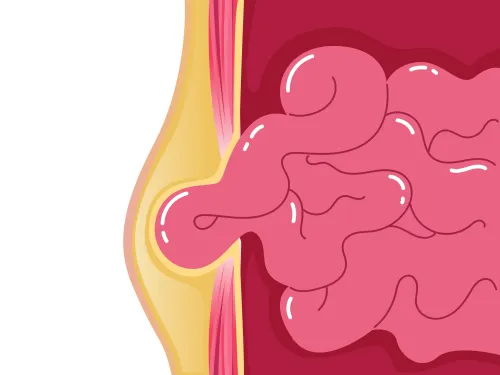
The examination starts with you standing, because gravity can reveal a bulge hidden while lying down. The surgeon inspects both groins and the abdominal wall, asks you to cough or strain, then feels the lump while you stand and lie down. Gentle pressure tests whether it is reducible, meaning it returns through the opening.
| Type | Examination clue |
|---|---|
| Inguinal | Bulge above the inguinal ligament and usually medial to the pubic tubercle; it can extend toward the scrotum. |
| Femoral | Lump below the inguinal ligament and lateral to the pubic tubercle, often high in the upper thigh. |
| Umbilical | Defect or bulge directly at the navel. |
| Epigastric | Midline lump between the breastbone and navel. |
| Incisional | Bulge beneath or beside a previous abdominal operation scar. |
| Recurrent | Bulge in the region of an earlier hernia repair, identified with your surgical history and scar examination. |
The surgeon also checks for tenderness, a firm trapped lump, abdominal distension and changes in the skin. A painful lump that will not reduce, especially with vomiting or inability to pass stool or gas, needs urgent hospital assessment rather than a routine hernia surgeon consultation in Thane.
When you need an ultrasound, CT scan or no imaging
A clear, typical groin bulge that appears when you stand or cough, feels reducible, and matches the examination usually needs no immediate imaging. The surgeon can diagnose it from inspection and palpation, then discuss monitoring or repair.
Imaging enters the decision when the examination does not settle the diagnosis. Ultrasound uses sound waves to assess an unclear groin or abdominal-wall lump, including a bulge that appears only with straining. It does not use radiation.
CT gives cross-sectional views when the hernia is occult, recurrent, large, complicated, or located in a scarred abdominal wall. It also helps assess bowel involvement. Tell the imaging centre if you are pregnant, have kidney disease, or have reacted to contrast.
The surgeon weighs:
- whether the lump is visible and palpable while standing, coughing, or straining
- whether it can be gently reduced and whether both sides have been examined
- previous operations, an incisional scar, recurrence, obesity, or uncertain pain
- vomiting, abdominal swelling, inability to pass stool or gas, or a painful irreducible lump
Urgent symptoms require hospital assessment, not a routine scan appointment. These findings guide hernia diagnosis and repair in Thane, rather than the lump’s size alone.
When a lump needs emergency hospital assessment
A painful lump that cannot be pushed back needs emergency hospital assessment, not a routine appointment. Go immediately if pain is rapidly worsening, the bulge becomes firm or tender, or the skin turns red, purple or dark. Do not force the lump back.
| Symptom pattern | Possible concern | Action |
|---|---|---|
| Persistent pain with a hard, irreducible lump | Incarceration | Attend an emergency department now |
| Vomiting, swollen abdomen, or inability to pass stool or gas | Bowel obstruction | Seek emergency care immediately |
| Severe escalating pain, fever, fast heartbeat, or skin discoloration | Strangulation and reduced blood supply | Call emergency services or go to hospital without delay |
These symptoms can worsen quickly, even if the lump seemed small earlier. Avoid eating or drinking on the way if surgery might be needed, and take your medication list with you. A family member should drive you if possible.
Routine hernia diagnosis and repair in Thane is appropriate for a soft, reducible lump without severe pain, vomiting or bowel changes. If those warning signs develop before your consultation, cancel the routine visit and choose the emergency department; hospital assessment may require urgent imaging, observation or surgery.
How the surgeon chooses monitoring or repair
Watchful waiting suits an adult with an asymptomatic or minimally symptomatic inguinal hernia when the lump remains reducible and daily activities continue normally. It means scheduled review and monitoring—not ignoring the hernia.
Increasing pain, enlargement, difficulty pushing the lump back, vomiting, abdominal swelling, or inability to pass stool or gas changes the decision to urgent assessment or repair.
Repair becomes more compelling when the hernia limits walking, lifting, work, exercise, coughing, or sleep. Location matters: a femoral hernia carries greater concern for complications, while incisional, recurrent, large, or complex abdominal-wall hernias need an individual plan rather than a size-based decision.
The surgeon also weighs your recurrence risk, previous repairs, smoking, obesity, diabetes, blood-thinner use, heart or lung disease, and fitness for anaesthesia. Mesh lowers recurrence for most adult groin repairs, but contamination, emergency surgery, previous operations, or a complex defect can alter that choice.
During a hernia surgeon consultation in Thane, ask why monitoring is safe for you, what change requires review, and which repair approach fits your risks. Dr Pallavi Ajankar,Laparoscopy,Laser Piles Surgeon can use that discussion to match the recommendation to your symptoms, examination and overall health rather than the lump alone.
Related service
Hernia Surgeon in Thane Dr Pallavi Ajankar is the Best Hernia Specialist, Hernia Doctor, Hernia Surgeon in Kasarvadavali, Naupada, Thane West and Thane. View service → |
What happens if repair is recommended
If repair is recommended, ask what the hernia surgery process in Thane includes, which operation suits you, and whether it is day-care surgery. Before scheduling, the team reviews:
- Medicines, especially blood thinners and diabetes treatment
- Smoking, allergies and previous anaesthetic problems
- Earlier abdominal operations and medical conditions
- Selective blood tests, an electrocardiogram or other tests based on your age, health and planned anaesthesia
| Option | What it involves | Main consideration |
|---|---|---|
| Open repair | An incision over the hernia, with local, regional or general anaesthesia | Suitable for many hernias; recovery depends on the repair |
| Laparoscopic repair | Small abdominal incisions under general anaesthesia; TEP or TAPP may be used | Can reduce early pain and speed recovery in selected patients, but adhesions, previous surgery or anaesthetic risk can affect suitability |
| Mesh repair | Mesh reinforces the weakened abdominal wall | Lowers recurrence for most adult groin repairs, but contamination, emergency surgery and previous operations can change the choice |
Many uncomplicated repairs allow discharge the same day after you can walk, drink and pass urine. Expect bruising, swelling, wound pain or temporary numbness; follow instructions on activity, lifting, driving and wound care. Seek review for fever, increasing pain, redness, discharge, repeated vomiting, difficulty urinating or a new irreducible bulge.
A small lump can be a seroma, not an immediate recurrence.
Frequently asked questions
What should I bring to a hernia surgeon consultation in Thane?
Bring photo ID, a referral letter if available, previous scan reports, your medication list, allergy details, insurance documents and your appointment confirmation or clinic address.
Will I need an ultrasound or CT scan for a hernia?
You may need no imaging when the examination clearly identifies the hernia. An ultrasound can clarify an uncertain lump, while a CT scan helps assess complex, recurrent or less obvious abdominal hernias.
When does a hernia lump need emergency hospital assessment?
Seek emergency assessment for a suddenly painful, hard or non-reducible lump, especially with vomiting, abdominal swelling, fever, inability to pass stool or gas, or skin discoloration over the lump.
How does a surgeon decide whether to monitor or repair a hernia?
The decision depends on pain, growth, activity limitations, hernia location and type, examination findings, risk of complications and your overall health. A repair is recommended when symptoms or risk justify surgery.
Keywords