The cost, preparation, hospital stay and recovery plan for laparoscopy depend on the operation you need, not on a standard “keyhole surgery” package. By the end, you will know what to ask during consultation, which instructions require careful attention, what happens in the operating room and which recovery symptoms need urgent advice.
Key takeaways
- Confirm the diagnosis and why laparoscopy suits your condition.
- Bring previous reports and a complete list of medicines and allergies.
- Ask which tests, fasting instructions and medication changes apply before admission.
- Get written advice on wound care, activity, diet and warning signs after discharge.
What happens during your first laparoscopic consultation?
Before scheduling an operation, a laparoscopic surgery consultation in Thane should establish the diagnosis and whether laparoscopy suits your condition. The surgeon reviews your symptoms, their duration and triggers, examines your abdomen or another relevant area, and studies previous reports, abdominal operations, allergies, medical conditions and current medicines.
Bring prescriptions, over-the-counter medicines, supplements, imaging discs and pathology reports.
Ask:
- What diagnosis does the evidence support, and is laparoscopy suitable?
- What would non-operative treatment or open surgery involve?
- What exactly will be removed, repaired, inspected or biopsied?
- How long might admission last, and what restrictions apply after discharge?
- Which risks are specific to this operation?
Consent should state the expected benefits, alternatives and risks, including bleeding, infection, injury to the bowel, bladder, blood vessels or other organs, blood clots, anaesthetic complications and conversion to open surgery.
| Procedure type | What happens | Typical purpose |
|---|---|---|
| Diagnostic laparoscopy | Inspects abdominal or pelvic organs and may take a biopsy | Finding or confirming a diagnosis |
| Therapeutic laparoscopy | Removes an organ, repairs a defect, divides adhesions or resects bowel | Treating an identified condition |
“Keyhole surgery” is not a complete explanation. Conversion to open surgery can become the safer choice when bleeding, dense adhesions, unexpected anatomy or poor visibility prevents safe completion.
Which tests and preparation are included before admission?
Before admission, laparoscopy surgery in thane what is included depends on the diagnosis, planned operation, age, medical history and hospital. There is no universal test package for gallbladder removal, hernia repair, colorectal surgery, diagnostic laparoscopy or proctology procedures.
| Test or assessment | When it may apply |
|---|---|
| Blood tests | To assess blood count, kidney function, glucose, clotting or other surgical risks |
| Urine testing | When infection, pregnancy or kidney-related information needs checking |
| Ultrasound, CT or MRI | To confirm the diagnosis and map the area being treated |
| ECG | When age, symptoms or medical history create an anaesthetic or heart concern |
| Chest assessment | When lung disease, symptoms or anaesthetic review makes it necessary |
Ask for written fasting instructions. The timing depends on the hospital and anaesthesia plan, so do not assume that normal eating or drinking is safe. Do not stop anticoagulants, antiplatelet drugs, diabetes medicines or weight-loss medicines yourself; the surgeon and anaesthetist may withhold, adjust or temporarily substitute them after weighing bleeding, clotting and glucose risks.
Confirm these practical instructions before arrival:
- Whether bowel preparation applies; it is used for selected colorectal operations, not routinely for gallbladder surgery or uncomplicated hernia repair.
- When to stop smoking or alcohol, when to bathe and what loose clothing to wear.
- Whether someone must take you home and whether an overnight stay is planned.
- A written estimate separating surgeon, anaesthetist, operating-room, mesh or implant, pathology, medicine, room, investigation and complication-treatment charges.
What happens during the operation and anaesthesia?
After admission, the team confirms your identity, planned procedure, consent and allergies. An anaesthetist usually gives general anaesthesia, so you remain unconscious and do not feel the operation.
1. Monitors continuously track oxygen level, blood pressure, heart rhythm, breathing and other vital signs. Airway support, such as a breathing tube, keeps ventilation safe while you are unconscious.
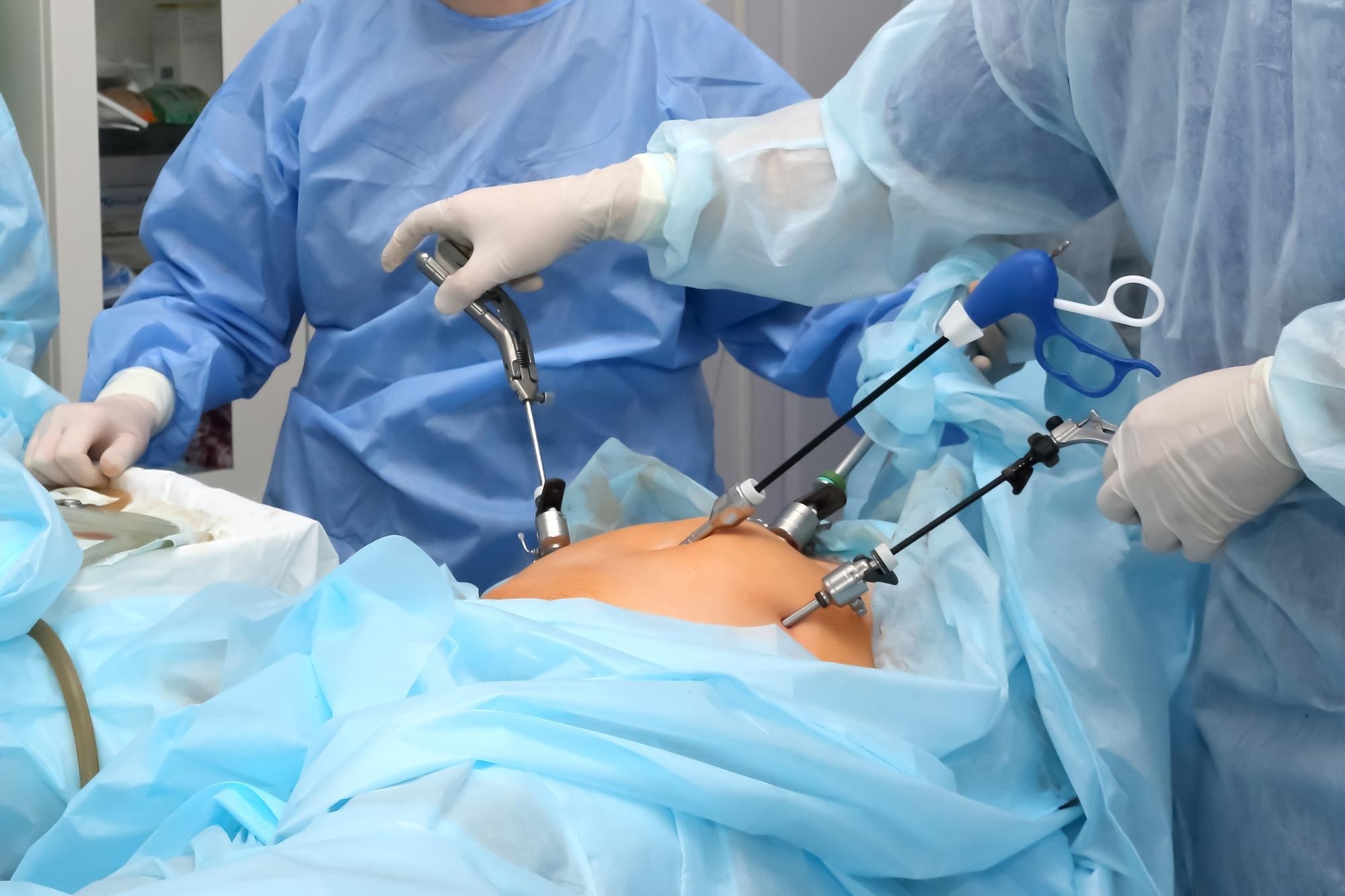
2. The surgeon makes small abdominal incisions and places ports through them. Carbon dioxide gently expands the abdomen to create working space; a camera and surgical instruments then pass through the ports.
3. The number and position of ports depend on the operation and your anatomy. Diagnostic laparoscopy may inspect organs or obtain a biopsy, while therapeutic surgery may remove an organ, repair a defect with or without mesh, divide adhesions or resect bowel.
4. The surgeon closes the port wounds with sutures, clips or dressings. An incision may need enlargement to remove a specimen safely. Pain relief and anti-nausea treatment are planned around your condition and the procedure.
5. Severe infection, major bleeding, unstable vital signs, dense adhesions, unexpected anatomy or poor visibility can make open surgery safer. Conversion is a safety decision, not automatically a failed operation, and your consent discussion should cover when it could happen.
These laparoscopic surgeon procedure details in Thane should be explained for your specific operation, not presented as a fixed sequence that applies to everyone.
What should you expect after discharge?
Nurses assess you in the recovery room before discharge. They check alertness, breathing, pain, nausea, urine output, wound condition and whether you can drink safely.
Many patients leave on the day of surgery, but bowel surgery, a lengthy or complex operation, uncontrolled pain or nausea, poor oral intake, or a need for monitoring can require an overnight stay.
1. Expect soreness around the small wounds and temporary shoulder-tip pain. Residual carbon dioxide can irritate the diaphragm and cause this discomfort.
2. Walk soon after surgery if your team instructs you to do so. Drink and eat as tolerated, and take prescribed pain relief rather than waiting for pain to become severe.
3. Follow the written instructions for diet, lifting, wound care and bathing. Return-to-work timing depends on the procedure; small skin wounds do not prove that internal healing is complete.
4. Drive only when you can perform an emergency stop comfortably, pain medicine does not impair you, and your insurer’s rules allow it.
5. Attend follow-up for wound healing, pathology results and the next activity step. These instructions form the practical plan for laparoscopy surgery recovery in Thane.
Seek urgent medical advice for increasing abdominal pain, persistent vomiting, fever, spreading redness or pus, heavy bleeding, breathlessness, chest pain, fainting, a painful swollen leg or inability to pass urine. Do not dismiss these symptoms as ordinary gas pain without assessment.
How can you compare a laparoscopic plan in Thane?
Compare a written plan, not the word “laparoscopic.” Laparoscopy surgery in Thane is not one standard package: gallbladder, hernia, colorectal and diagnostic procedures involve different staff, equipment, admission times and follow-up needs.
Ask the surgeon to write:
- The diagnosis, proposed operation, likely port positions, possible incision enlargement and anaesthesia plan.
- Expected hospital stay, recovery restrictions, follow-up dates and the point at which pathology results will be reviewed.
- What could trigger conversion to open surgery, and how that change would affect recovery time and charges.
Compare estimates only when they contain the same cost areas:
| Cost area | Check that the estimate names |
|---|---|
| Surgeons and anaesthesia | Surgeon’s fee and anaesthetist’s fee |
| Facility and stay | Operating-room charges and hospital-room charges |
| Materials | Mesh or other implants, if required |
| Aftercare and diagnosis | Pathology, medicines and investigations |
| Unexpected treatment | Treatment of complications and additional admission costs |
During a laparoscopic surgery consultation in Thane, ask which parts occur at the hospital, who provides anaesthesia and how urgent concerns are handled after discharge. A practice such as Dr Pallavi Ajankar,Laparoscopy,Laser Piles Surgeon can explain these responsibilities before you consent.
The better choice is the plan that fits your diagnosis, explains its limits plainly and gives you written instructions for preparation, admission, discharge and follow-up—not automatically the plan labelled laparoscopic.
Related service
Laparoscopic Surgeon in Thane Dr Pallavi Ajankar is the Best Laparoscopic Surgeon in Kasarvadavali, Naupada, Thane West and Thane. View service → |
Frequently asked questions
What happens during a laparoscopic surgery consultation in Thane?
The surgeon reviews your symptoms, examines the relevant area, checks previous operations and reports, and assesses medicines, allergies and medical conditions before discussing whether laparoscopy fits your diagnosis.
Which tests and preparation are included before laparoscopic surgery?
Preparation depends on the operation and your health. Ask for the required blood tests, urine testing, imaging, anaesthesia assessment, fasting instructions and guidance about medicines such as blood thinners or diabetes treatment.
What happens during laparoscopic surgery and anaesthesia?
An anaesthesia team monitors you while you receive general anaesthesia. The surgeon makes small abdominal incisions, uses a camera and instruments, completes the planned procedure, and closes the incision sites.
What should you expect after discharge during laparoscopy surgery recovery in Thane?
Expect written instructions for pain relief, wound care, bathing, diet, walking, work and follow-up. Seek urgent medical advice for severe pain, persistent vomiting, breathing trouble, heavy bleeding, fever or worsening wound redness.
How can you compare a laparoscopic plan in Thane?
Compare the confirmed diagnosis, proposed procedure, alternatives, surgeon and anaesthesia arrangements, included tests, hospital stay, follow-up schedule, recovery restrictions and clear instructions for handling complications.
Keywords